
Transport/pickingcarry, take out, put down. We take on processes that were previously handled by humans.
Conveyance and picking are tasks that consume the most human time and are the least likely to add value. A mobile manipulator that can handle both movement and object manipulation can be entrusted with not only transportation, but also picking up and loading and unloading items at storage locations.
Consult about transportation/picking
It is difficult to automate transport work if it is separated.
Automatic guided vehicles such as AGV and AMR are already widely used to automate transportation. However, these are specialized for transportation, and the work of loading and unloading them is generally carried out by people. As a result, humans remain on site to wait for the robot.
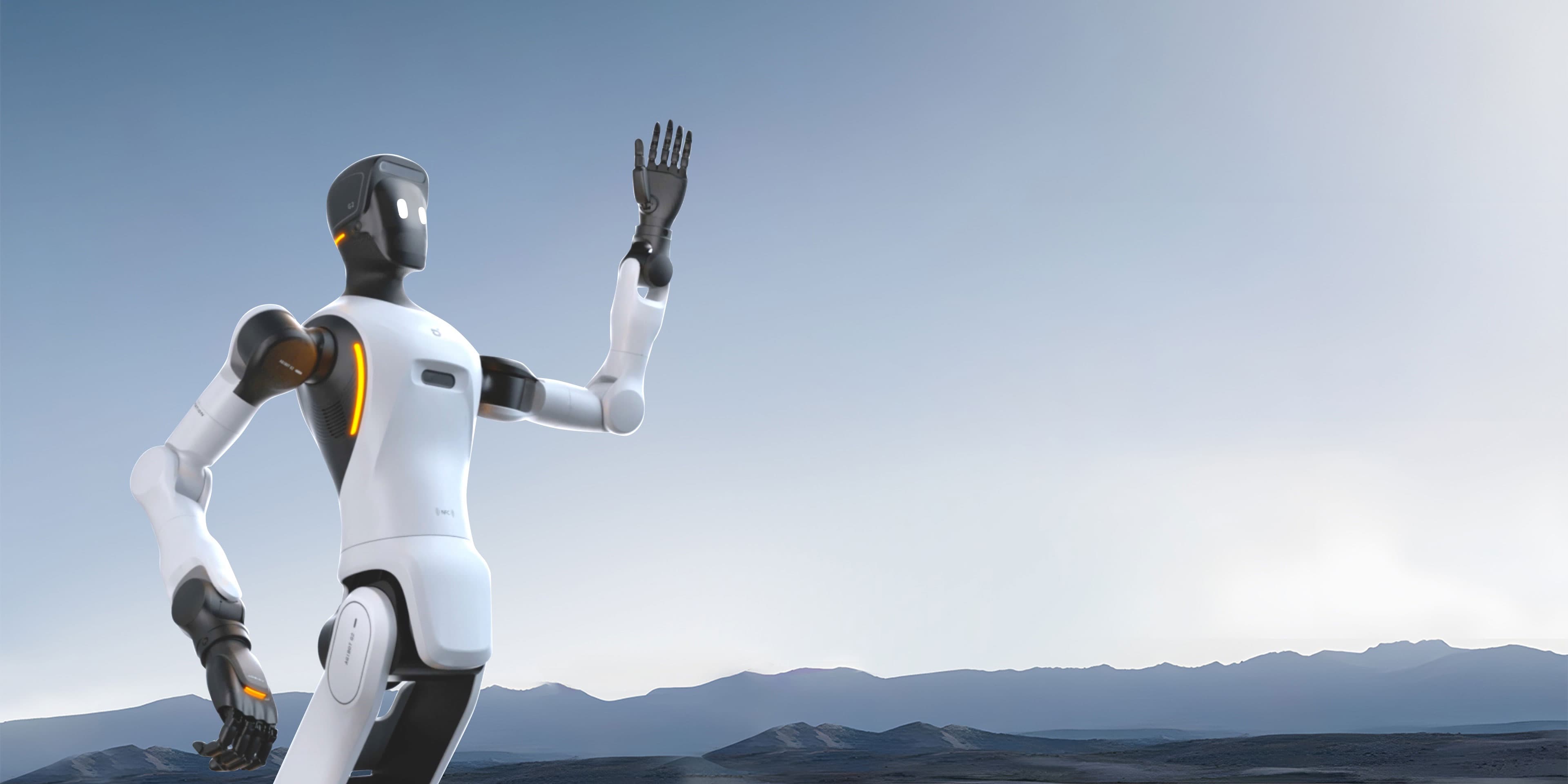
Mobile manipulators eliminate this separation because they have a movement mechanism and an arm as one unit. The process of taking an item off the shelf, transporting it, and placing it in the next process can be treated as a series of operations.
In a field where the shape and placement of objects change every time, it is difficult to write down the movements in advance. In these processes, the imitation learning approach, which involves showing people's work and learning from it, is effective.
Targeted work
Transport of parts between processes
Work that transports parts between processes such as processing, assembly, and inspection. The greater the distance and frequency, the more effective you will see.
Removal from container
The task of removing objects from boxes or containers. Visual perception and learning are required when the orientation and stacking methods are inconsistent.
Loading and unloading to storage area
Loading and unloading onto shelves and pallets. The labor-saving effect will be greatly influenced by whether the work can be entrusted with the transportation work.
Picking in the warehouse
The task of collecting objects according to instructions. Suitable for sites with many items and long distances for people to travel.
Moving trolleys/carts
Pushing/pulling the existing trolley. It can be put into current operation without replacing equipment.
Collection of waste materials and auxiliary materials
Collection work that occurs regularly. Processes that repeat a fixed route are easy areas to start with.
Things to check before verification
Whether this is true or not depends mostly on the object and site conditions.
- Object shape and variation
- Is it the same shape or does it change every time? The greater the variation, the more emphasis is placed on visual perception and learning.
- Weight and ease of grip
- In addition to the weight capacity, check if there is a surface to grip or if it deforms. This is directly related to hand selection.
- Transport distance and route
- Floor surfaces, steps, doors, and foot traffic. This will affect the selection of transportation method.
- Required takt time
- Is it necessary to have the same speed as humans, or can it be achieved even if it is slower? Your decision will depend on whether this is realistic or not.
- Impact of failure
- If you drop it, will it break or the line will stop? It becomes the standard for determining safety conditions and how to proceed with verification.
- System of operating personnel
- Who will be responsible for starting, charging, and responding to abnormalities? Depends on whether it continues after implementation.
Frequently asked questions
What is the difference between AGV and AMR?
AGVs and AMRs are specialized for transportation, and loading and unloading tasks are generally carried out by humans. Mobile manipulators have arms, so they can handle everything from picking up, transporting, and placing items. Which is more appropriate depends on the process, so we also propose configurations that utilize existing equipment.
How much weight can it handle?
It varies depending on the robot and hand configuration. If you let us know the weight and shape of the object, we will suggest a configuration that can handle it. In addition to the payload capacity, the presence of a gripping surface is also an important condition.
The shape of the object changes every time. Can you handle this?
This is an area that is difficult to deal with by writing down the movements in advance. Imitation learning/VLA approaches, which learn movements from human work demonstrations, may be effective. First, we will check the feasibility on an robot.
Can I verify without stopping the existing line?
There is a way to enter through verification on simulation. We use NVIDIA Isaac Sim/Isaac Lab to reproduce the environment and refine the conditions before moving it to the robot. Final confirmation will be performed on the robot.
Actual machine verification of transportation and picking
Please let us know the object, transportation route, and current number of workers. From PoC focused on one process, we determine the conditions that will hold true.
Consult about transportation/picking